Brookfield7

All content, of both the original Brookfield7.com and this blog, is written from my point of view and is my opinion. I believe it to be accurate at the time it is written. ~ Kyle Prast, Brookfield resident since 1986

Tuesday, April 30, 2013

Two 'Weed Out' Days at Mary Knoll Park! Saturday, May 4 & 11, 2013

This year there are 2 Weed Out days at Mary Knoll Park in Brookfield on Saturday, May 4th and then Saturday, May 11th.  Both dates start at 9 am  and finish at noon. We may be having a slow spring, but the Garlic Mustard marches on!

The first weekend's focus on May 4th, will be on pulling the invasive Garlic Mustard. It is already up and easy to identify.  Don't worry if you are inexperienced. As always, Patty Gerner will give instruction on what to look for and how to pull the weeds. (Usually Gary Majeskie from Park & Rec. Forestry Department attends too.)  It is a great opportunity to learn about these invaders so you can check your own yard for the pests.

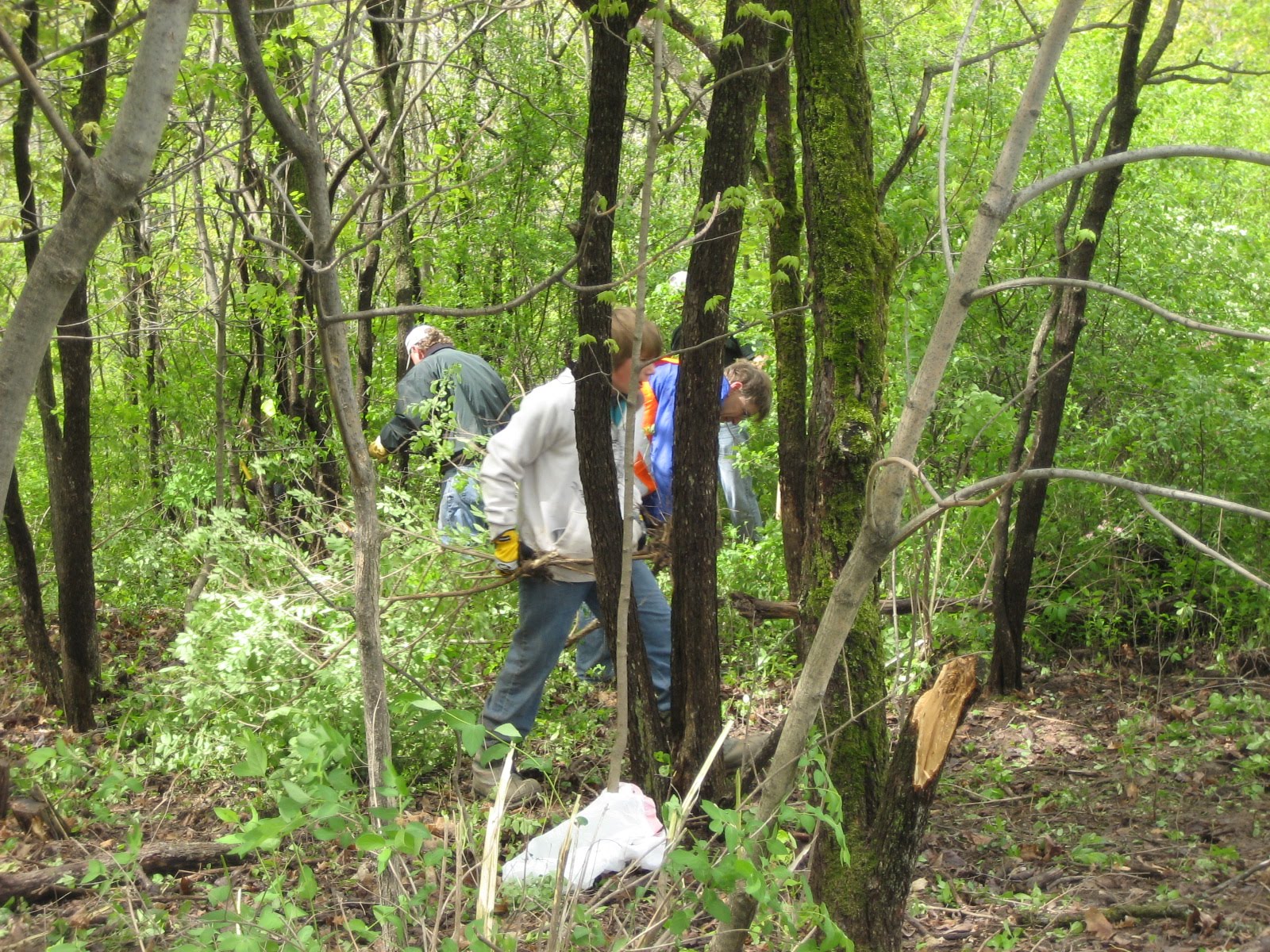
On the second weekend, May 11th, the more hearty will help Boy Scout Troop 23 volunteers dig out the bigger invaders: Buckthon trees and (possibly) Honeysuckle bushes. Both produce numerous berries and are prolific spreaders. The Buckthorn trees shade and crowd out native plants and trees; Honeysuckle berries irritate bird's digestive systems and provide no nutritional value.

To help, give the Parks, Recreation & Forestry department an idea of how many volunteers to expect, call 262.796.6675 to register. (Not necessary. If you forget to call, come anyway.)

So consider joining the group this Saturday and/or next at Mary Knoll Park, 615 S. Sunnyslope Road, just south of the I-94 overpass bridge, in Brookfield, Wisconsin. I've been to most of the Weed Outs and it's always been an enjoyable workday, not to mention a great opportunity to enjoy a morning in the park and see the wonderful native plants that are thriving now that they aren't being crowded out by the aliens.

Wear gardening clothing and bring gloves.

Past Garlic Mustard Posts with photos:
2012 Weed Out Time (with photos)
3rd Annual Weed Out (with photos)
It is worth saving (pictures from Weed Out and wildflowers)
Oh, the shame! (photos and tips for evicting Garlic Mustard)

Weed control links: Garlic Mustard and garlic mustard's pretty cousin, Dame's Rocket. (It can take over native areas too.) Garlic mustard should be thrown in the trash and labeled Garlic Mustard: Do not compost.


Labels: , , , , ,

Tuesday, January 15, 2013

Nature without Naturalism: New Thoughts on New Earth, Tuesday, Jan. 22, 2013, 7pm


What gardener doesn't long for a garden free of weeds, pests, and disease? And don't most of us want pure, toxin free water to drink, clean air to breathe, safe foods to eat , and a pristine environment to live in, where all can thrive in harmony on a renewed earth? In short, we are looking for a perfect world, an Eden.


Unfortunately, a perfect world like this is not possible on our earth at this time.

But there is a day coming when everything will be made anew, and this is the subject of this month's Creation Science Society of Milwaukee lecture: Nature Without Naturalism: New Thoughts on a New Earth. 

In this presentation, Rick Albrecht, a West Allis -West Milwaukee science teacher, will team up with Tim Albers, a psychologist at local schools, both private and public, to bring us this seldom discussed program. These two rather hard-nosed realists will look at the subject of origins from the other end of history, from the viewpoint of our planet's destiny.

Contrary to popular misconceptions, Albrecht and Albers point out, the Bible predicts a restored, renewed, physical and "earthly" New Earth -- painting a picture that would dazzle even the most optimistic of environmentalists. The pathway to this magnificent destiny: taking naturalism out of nature.

In order to provide their audience with a rarely considered and fascinating view of our planet's wondrous future, their wide-ranging talk will cover subjects from genetic coding, information theory, and astrobiology to motivation theory, cosmology and paleontology.

This presentation is sponsored by the Creation Science Society of Milwaukee and is free and open to the public. The talk will take place at 7 p.m. on Tuesday, January 22, at Brookfield Lutheran Church, 18500 W. Burleigh Rd., Brookfield, Wisconsin. Directions


More about the speakers: 
Rich Albercht translated his love of mountains into a degree in geology. His career-long fascination with the topic of our universe's origins has led him to speaking engagements in many venues. 
Tim Albers, a graduate adjunct professor at Concordia University Wisconsin who focuses on subjects from worldview analysis to the roots of school violence. He has presented creation - evolution issues in settings from the Audubon Nature Center to an international conference on Intelligent Design.

Upcoming events:  Jay Seegert, Tuesday, February 26, 2013, Milwaukee Lutheran High School Cafeteria
Dr. Jerry Bergman, Tuesday, March 12, 2013, Grace Bible Church
Jerry Frye, Tuesday, April 16, 2013, Brookside Baptist Church

Blog Archives - Creation Science:
Understanding Fossil Evidence
Answers in Genesis Nov. 2012 Conference
Origins, Beauty, and Wrath: Why What We Believe Matters Today
Purpose Precedes Creation
The Importance of Worldview & literal 6 day creation

Dr. Bolander: The Miracle of Human Development 
The great debate at UWM: 'Intelligent Design vs. Darwinism: Can Science Point to God?' Tues. March 6, 2012
Former evolutionist Paul Frank discusses Creation / Evolution debate 
Dr. Scott Hardin, From Fish to Amphibian (Impossible)
From Feminist Atheism to Biblical Truth


Creation Science Society of Milwaukee website: GenesisMatters.org

Labels: , ,

Wednesday, October 03, 2012

Invasion of the red and black beetles

Has your home and yard been invaded by 1,000s of small, red and black beetles? 

Mine has, and they are leaving blood-red drip marks all over my freshly painted white garage doors!

Though nowhere near the epic proportions of the plague of flies and gnats Pharaoh and the Egyptians had to endure in the book of Exodus, I do not recall ever seeing such swarms in my lifetime.

I didn't really know what these red and black beetles were. Fortunately, they seemed pretty harmless. And they were stupid--didn't even try to get away when I squished them with a tissue. They reminded me of a smaller, more red Box Elder beetle, and in fact, emitted the same odd scent that Box Elders did when killed.

A quick Google confirmed my suspicions: They were Boxelders--in the nymph stage! (Youngsters) This website instructed that homeowners "Take the offensive, and attack the fall box elder bugs to keep them from becoming spring box elder bugs." You can spay their swarms with insecticidal soap, diluted laundry detergent, or pyrethrin (chrysanthemum based) insecticides.

As for removing the blood-red drips on my pristine white garage doors, I used about a quart of warm water, 2T of Oxyclean, and a squirt of Shakley Basic H. The red marks, which I think are the drip marks from feasting spiders, came off easily with this mixture. Probably any mild soapy mixture would work. I rinsed with clean water, and the beauty of my summer work project was restored.

So don't despair, another webpage says only the mature adult bugs overwinter in cracks, crevices, and protected areas. The cold weather will put an end to them.


Labels: , , ,

Friday, June 08, 2012

My very own Fox & Friend or natural rodent control

May I introduce you to my very own rodent patrol squad: Mr. and Mrs.(?) Red Fox! 

Yesterday morning, I saw one sunbathing in my backyard and quickly went for the camera to snap a picture. While I was focusing, another fox joined the first! They greeted each other with a nose nuzzle, and then stretched out in the grass to enjoy the sunshine. They stayed there maybe a half an hour then disappeared back into our woods.

Now we have had foxes in our neighborhood for several years-- they have been known to den down the street,  in a backyard near Kinsey Park. In the past, we would see one in or cutting through our yard from time to time. Earlier this week, I saw the first fox of the season streak across our yard, chasing dinner.  But this is the first time I have ever seen 2 full grown foxes in our backyard this early in the year. 

A quick Google informed me that Wisconsin foxes have their litters of "5-6 babies in March", and the pups don't go out on their own until they are about 7 months old. So I am wondering if these are the parents, as both the male and female share in parenting duties, and maybe their den is nearby--not too far from the kiddos? Time will tell.

As a gardener, I appreciate the excellent job they do at keeping the mice and rabbits at bay! Since they have come to our neighborhood, our mouse and rabbit problem has been greatly reduced. They also tidy up the yard under our Mulberry tree during berry season. Foxes eat small rodents, amphibians, and fruit. (Remember Aesops fable, The Fox and the Grapes?) 

But rodent patrol aside, they are just fun to watch, with their red coat, white jabot, and black stockings. So count yourself fortunate if you are able to catch them relaxing. Foxes are one of the joys of living in Brookfield.


Though foxes don't form packs and are only the size of a small dog--around 9-12 pounds--do remember they are still wild animals. Give them their space.  If foxes are in your area and you have small children or a small dog, do supervise them when outside.


Labels: , ,

Thursday, May 05, 2011

Remember, Saturday, May 7th is WEED-OUT day at Mary Knoll Park

Though the temperatures might seem more like it is March or April, the calendar says it is the first weekend in May, and that means it is time for the annual Garlic Mustard Pull WEED-OUT at Mary Knoll Park in Brookfield.

If you have noticed, the spring plants are a bit behind this year (due to the colder weather) but don't worry there will be nothing for you to do--Garlic Mustard doesn't wait for the sun to shine to make its presence known!

If enough strapping men show up on Saturday, there might be an opportunity to do some BUSHWHACKING again.

Last year some Boy Scouts and their dads attacked the invasive Buckthorn trees and Honeysuckle bushes, clearing an area near the tennis courts at the park. These plants are a problem because they crowd out good, native plants. In addition, Honeysuckle bushes produce little red, orange, or yellow berries that look good, but actually irritate the digestive systems of birds. (The birds eat them and then suffer the G.I. consequences later!)

As usual, the WEED-OUT will be held rain or shine, from 9am to noon, on Saturday, May 7, 2011.

For those of you not familiar with Garlic Mustard...

Garlic Mustard is a terrible invasive weed that if left alone will completely take over any area it is allowed to grow in. Area residents, Patty Gerner and family, have been been battling this thug at Mary Knoll Park since 1997. Because of their efforts, along with the help of the annual Weed Out teams, the Garlic Mustard is in retreat and the native wild flowers are making a comeback.

I have participated in several of the Weed Outs and always enjoyed them. Unlike Bushwhacking, the work isn't difficult and Brookfield's Park & Rec. Department provides large bags and will dispose of the weeds too. All you have to do is come prepared to work. They will even provide instruction! (Photo from past Weed Out.)

Do wear your gardening clothes and bring gloves. You might want a kneeling pad or mat and a water bottle. Showers are forecast, so a rain poncho and hat might be a good idea. (Wet weather makes it easier to pull the weeds.)


Excerpts from the Parks, Recreation & Forestry flier:

Who can participate?
Any interested individual or group This is an excellent community service project for any organization, school or church group, family, or private individual concerned about the environment and the City parks.


Why participate?

To help our native plants and animals survive so that we can continue to enjoy them. Garlic mustard is an invasive weed introduced on the east coast by early settlers for its alleged medicinal qualities and cooking. In our community it spreads rapidly, overtaking wildflowers, native tree and shrub seedlings. It then drives out animals, birds and insects that depend on a diversity of plant species for food and shelter. To Register, Call the Parks, Recreation & Forestry Office at (262) 796-6675. (Registration is not mandatory, but gives us an idea on how many volunteers to expect) “Project Partners”: The Gerner Family, Boy Scout Troop 23, Brookfield Central High School Key Club and UW-Extension

Rain or Shine!

You don't have to live near the park to participate. One year a woman from the north side of Brookfield came to learn how to go about eradicating the weed from her neighborhood park. I think she was hoping to form a group in her area to work on their park. Great idea.

Mary Knoll Park is located at 615 S. Sunnyslope Road, just south of the I-94 overpass bridge, in Brookfield.

See you there?


Past Garlic Mustard WEED-OUT Postings:
5th Annual Weed Out

4th Annual Weed Out

3rd Annual Weed Out (with photos)

It is worth saving (pictures from Weed Out and wildflowers)

Oh, the shame! (photos and tips for evicting Garlic Mustard)

Weed control links: Garlic Mustard and garlic mustard's pretty cousin, Dame's Rocket. (It can take over native areas too.) Garlic mustard should be thrown in the trash and labeled, Garlic Mustard: Do not compost.


Links: Practically Speaking, Fairly Conservative, RandyMelchert, Betterbrookfield, Jay Weber, Vicki McKenna, CNS News, Mark Levin, Breitbart BigGovernment, The Heritage Foundation

Labels: , , , , ,

Wednesday, February 02, 2011

No shadow of a doubt? Our groundhog predicts early spring

As my husband and I manned the snow blowers in the driveway last night, I did think this blizzard's silver lining might be that the groundhog would NOT see his shadow Wednesday morning.

Sure enough, Wynter, the Milwaukee County Zoo groundhog did NOT see her shadow this morning! Instead, she frolicked around in the snow a bit before going back into her den. Other groundhogs predicted the same--an early spring. I am all for that!

I couldn't help notice some other winter wonderland frolickers this morning. The kids down the street were literally diving head first into the snow banks, along with their pet Golden Retriever. Glad someone is enjoying the white stuff.

Me? I am thinking warm thoughts by planning a southern New Mexico and Arizona vacation. This will be new territory for us, and of course we want to see it all. Editing is never my strong suit: So many National Parks and Monuments...so little time.

Feel free to share your must see southern New Mexico and Arizona sites.

In the meantime, I hope our groundhog is right and we have an early spring.


Links:
Practically Speaking, Betterbrookfield, RandyMelchert, Jay Weber, Vicki McKenna, The Right View Wisconsin, CNS News, Mark Levin, Breitbart BigGovernment, The Heritage Foundation

Labels: , , , , ,

Friday, November 12, 2010

Video of rescued baby hummingbird has to make you smile!


If you need a lift today, watch this enchanting home video of a young man and baby hummingbird that survived an attack. It will make you smile. The song playing in the background is "Better Together".

Hummingbirds are remarkable little animals. I always enjoy watching them when they visit my flower garden at home. Maybe my fascination is genetic? My dad used to spend hours watching and filming hummingbirds when my parents went camping.

When my husband and I camped at Wyalusing State Park in 2009 (near the Mississippi and Wisconsin Rivers in Wisconsin), we enjoyed watching the hummers swarm around the flowers and feeders at the ranger station. But their group of hummingbird diners can't compare with the number of hummers in the following video.

This video is of people hand feeding the birds in Alaska at the Saltery Lodge.

The link also contains some facts about hummingbirds and tips on feeding them.

So if you like hummingbirds as much as I do, start planning your hummingbird feeding station for next year! Since I don't like to mess with the feeders, my strategy is to provide flowers they like to feed on such as Bee-balm and Phlox. (If they are hungry enough, they don't seem too fussy; I saw them drink from the blossoms of Lambs Ears.)

Related links:

Links: Practically Speaking, Betterbrookfield, RandyMelchert, Jay Weber, Vicki McKenna, The Right View Wisconsin, CNS News, Mark Levin, Breitbart BigGovernment, The Heritage Foundation

Labels: ,

Tuesday, September 07, 2010

Who ate my dill?


One day this summer, I noticed my dill was stripped clean in my vegetable garden, which disappointed me, to say the least. Upon further inspection, I found the culprit. It was a plump Black Swallowtail caterpillar! Somehow my disgust quickly dissipated into delight.

I quickly looked over my other carrot family plants like cilantro, parsley and Queen Anne's Lace, hoping to find more. Black Swallowtails feed on plants from the Parsley/Carrot family. In fact, some people call them parsley-worms. I didn't see any more caterpillars that day but decided to make a point of watching my little friend's progress from then on.

Since he had eaten all my dill, I moved him over to some Queen Anne's Lace. Two days later he had undergone a change; he had attached himself to a stem. The next day he started making the chrysalis, which became more colorful as time went on.

Fully expecting him to overwinter in my garden, I marked the spot where he was so as not to disturb it when cleaning out my flowerbeds in the fall. We then went on vacation for 2 weeks.

First thing I did when I got home though was to check on my guest. He was gone! I missed the show.

From my first encounter to the chrysalis stage took about 10 days. How long it took him to transform and fly the coop, I don't know. What I do know is, next year, I am planting more dill!

Although I did find a few more caterpillars in my garden, I never did find their chrysalises. I hope they have moved on to start the whole life-cycle all over again as well.

If you have never witnessed the unusual transformation of caterpillars into butterflies, you have missed one of God's most amazing little shows on earth. The intracacy of each stage and how different each is from the other is truly a mystery--a mystery I never tire of witnessing.

Want to learn more? Magiccanoe.com: Black Swallowtail caterpillar
Insects.tamu.edu Fieldguide Black Swallowtail (Photo of adult is from here)
Life Cycle of a Black Swallowtail Butterfly - includes info on how to set up a butterfly watching enclosure.

Links: Practically Speaking, Betterbrookfield, RandyMelchert, Jay Weber, Vicki McKenna, The Right View Wisconsin, CNS News, Mark Levin, Breitbart BigGovernment, The Heritage Foundation

Labels: ,

Wednesday, September 01, 2010

What is BIG, Yellow & Black, and Scary? (to some)


This being the first day of school in our area, you might have answered that question by saying the school bus! But my riddle refers to the Yellow and Black Argiope spider, more correctly known as the Black & Yellow Argiope, an orb weaver.

I discovered this beauty last week. I was about to pull the dried day lily stems from the sides of my driveway when I came across this splendid spider. Wow! Pretty impressive. What kind is this? I wondered. The stems can wait; I hated to disturb it.

Getting out my trusty Audubon Field Guide to Insects and Spiders, I found my mystery spider was a female Black & Yellow Argiope. They are fairly common, although I had never seen one before. The guide said the males were small, 1/4" to 3/8"; the females are much larger, 3/4" to 1 1/8", so mine was a biggie.

I thought it would be fun to keep an eye on what she was up to so I would check on her daily. The next day I say she had caught a grasshopper and wrapped it up for future use. She also dined on a yellow-jacket a few days later.

While trying to get some closeups of Mrs. Spider, I found she quick as a wink could switch sides of her web. At first I thought I was seeing things, but she managed to slip through her web to sit on the opposite side faster than my eye could see. I remembered from studying spiders during my homeschool days that spiders did not get hung up on their sticky webs, as she so adeptly demonstrated.

I also remembered spiders had several different spinnerets, so to speak, on their web spinning orifice. The food storage web is a different type web material than the web itself, for example. The heavier zig-zag web was made by the male, according to my Audubon guide: "Male builds web in outlying part of female's web, making a white zig-zag band vertically across the middle."

Some people might look at a spider as just an object of horror. (Obviously I don't suffer from arachnophobia.) I look at the spider and its intricacies and marvel at its design and the Designer who created it. Just look at their spinneret organ and think about that happening by accident.

Sadly, my Mrs. Spider was nowhere to be found yesterday, nor have I been able to locate Mr. I will check on them again today. I did notice a new web nearby with a new Yellow and Black, this one a tan variation. For more information, check out what the Bug Guide has to say. They have many great photos of the color variations.

Now if you are brave enough, take a look at the Black & Yellow in action. Relax, they are not aggressive and rarely bite.


Links: Practically Speaking, Betterbrookfield, RandyMelchert, Jay Weber, Vicki McKenna, The Right View Wisconsin, CNS News, Mark Levin, Breitbart BigGovernment, The Heritage Foundation

Labels: , ,

Sunday, May 30, 2010

Song of the Pond


Late in the spring, when the weather is warm, listen for the song of the pond. Sometimes you don't have to listen all the carefully, because the unmistakable trill of the toads and frogs is deafening. That was the case when I snapped these pictures at Kinsey Park pond during those warm days in early May. Now that the weather is again warming, the singers should be out again.

I find their song rather appealing. It reminds me of when we had African Swimming Frogs as pets. They would trill at night, hoping to attract a mate. Alas, we only had guy frogs. But their song was pleasant just the same.

The young frogger who had captured the group in my photos had quite a collection in her tub. Her grandmother was hoping for catch and release. There are also large frog tadpoles in the pics.

I had been to the pond the day before and found the toads singing away, among other things. I will keep my eyes peeled for tiny black toad tadpoles. (They look like swimming raisins.)

My son and I raised toad tadpoles when he was little, and I have to admit it was great fun. We had the tank sitting on the kitchen table for weeks it seemed. We fed them cooked spinach and watched them mature. Tadpoles eat algae, so if you don't have algae rich water, you may use tap water. If it is city water, let it sit for a day to rid it of the chlorine. If you use pond water, strain it first. We had some pond water that had some weedy clumps in it. Unfortunately, it also had some dragonfly nymphs in it. Those nymphs devoured 3/4 of our tadpoles before we discovered their presence!

Once the tadpoles get their legs and lose their tails, be sure they have a rock to climb on. They will need to breathe oxygen from the air at this point. We released ours back into the "wild". Be sure to let toads go near a body of water. Frogs obviously need to be released into the water--preferably from the creek or pond you took them from. (We got our toad tadpoles from a ditch.)

For more information on keeping tadpoles, see Pets In a Jar--a great source of the care and feeding of little critters. Hope you enjoy 'em; we had a hoppin' good time with ours.


Links: Practically Speaking, Betterbrookfield, RandyMelchert, Jay Weber, Vicki McKenna, The Right View Wisconsin, CNS News, Mark Levin, Breitbart BigGovernment, The Heritage Foundation

Labels: , , ,

Monday, September 28, 2009

Watch Ken Burns' National Parks: America's Best Idea series on PBS or online

Last night, the first in a series of 6 programs on America's National Parks aired on PBS. The remaining programs will be shown this week.

In case you missed last night's, or are unable to see them all, they are also available to view online the day after they appear on TV until October 9th.

Being avid National Parks fans at our house, we watched Episode 1. It highlighted the early history of the National Parks concept and our nations first 2 National Parks: Yosemite and Yellowstone. Yosemite was the first land set aside by an act of congress; it was put under the jurisdiction of the state of California.

But the program raised an interesting question: had Wyoming been a state at the time Yellowstone's 2 million acres were designated as a park in 1872, would it be just another state park like Yosemite or National Park?

In any event, I am grateful it was set aside for the enjoyment of the people--we sure enjoy it! Pictured is Beehive geyser, a name given to the dome shaped cone by the 1870 Washburn expedition mentioned in the program. (Beehive's plume can reach to about 200 feet tall. Very impressive, especially because you view it from close range--so close you sometimes get wet!)

Enjoy.

PS: Yellowstone is hands down our favorite park. Grand Canyon North Rim would be 2nd favorite, Yosemite maybe 3rd, but it is rather like picking a favorite child! Bryce, Zion, and many others could easily vie for the number 3 slot! And then, there are all those still to be visited. destinations!

Links: Practically Speaking, Fairly Conservative, Betterbrookfield, RandyMelchert, Jay Weber, Vicki McKenna, The Right View Wisconsin, CNS News, Mark Levin, Breitbart BigGovernment, The Heritage Foundation

Labels: , , ,

Saturday, September 12, 2009

A peach of a year.... literally!

I was just about to give up on my 2 peach trees since I hadn't had a real harvest in several years.

In fact, I've barely had a bloom in recent memory. Was their absence of bloom due to Wisconsin temperatures returning to former colder norms, I wondered, after those warmer temperatures of the 1990s?

But this year I was pleasantly surprised: my trees bloomed last spring! The blossoms were sparse, but they were there. Pretty amazing when you consider our cold, long winter.

My peach trees are the children of a volunteer tree in my yard. The parent tree just appeared one year and I was fortunate enough to recognize the leaf as being a fruit tree. I am guessing a squirrel must have planted it either from a pit taken from an area peach tree or one scavenged from someone's garbage. Since the mystery tree was growing at the edge of my yard, I just let it grow until it matured enough to bloom. (I usually do this with unknown plants and have often been pleasantly surprised.) One year I was given a very unexpected Mother's Day present: my little tree was covered in pretty pink blossoms. It was a peach tree!

That first tree was a great producer. I picked several grocery bags full of delicious freestone peaches that year and for several after. Because my tree started ailing, and it's location wasn't great, I planted a few pits to start new trees. That is how I got my present 2 trees.

Peach trees are rather fragile. I had read that even in commercial orchards, they often only live for 15 years. Since my trees are the standard height, they want to get tall and leggy instead of being an easy to harvest dwarf type. Still, free is good, and homegrown peaches are a real treat.

We are on the borderline of the peach belt temperature wise, but there are some varieties that are more cold tolerant. Thankfully, my peaches were the freestone variety. I have never had to spray them or use chemicals either. My fruits sometimes have dots on the skins but this does not affect the inner fruit.

I have spotted a few apricot trees in the neighborhood, but never a peach. Maybe this fall during the great nursery stock markdown sales at gardening centers, you might decide you want to try your hand at peaches. If the tree is inexpensive enough, what do you have to lose? Give them a try.

This year's harvest of 50* or so fruits was enough to give me hope for future harvests from my 2 trees. I sure enjoyed those past years of bounty, having peaches-o-plenty to eat for weeks, share with neighbors, and make a freezer full of homemade peach pies. As most gardeners say, maybe next year will be the year of plenty again?


*Although my trees had a pretty decent bloom and weather cooperated allowing blossoms to set fruit, I lost the majority of tiny peaches in a strong rain.

Links: Practically Speaking, Fairly Conservative, Betterbrookfield, RandyMelchert, CNS News, Jay Weber, Mark Levin, Vicki McKenna Jay Weber, The Right View Wisconsin, Breitbart BigGovernment, The Heritage Foundation

Labels: , , , ,

Tuesday, September 01, 2009

My Mulberry marathon continues

Mulberries: birds love 'em, so do the deer*; I think they are quite tasty too. But I only just had my suspicions confirmed: they are also packed with the anti-oxidant resveratrol. Best of all, they are free!

This summer, it seems that the ripe fruits just keep coming. I think we are past 2 months now and my tree still has plenty of unripe fruit in it. (Unripe fruits are white.)

I can't remember a longer production season, so I am beginning to wonder if our cold summer is the cause of my Mulberry marathon? Whatever the reason, the critters and I are enjoying their sweet, delicious fruits.

We have several mulberry trees on our acre lot here in Brookfield, and I suspect they were all volunteers - planted by the birds. (Some people consider them a weed tree but they are available for purchase too.)


The dark side of Mulberries is that the ripe berries that fall to the ground or via bird droppings can stain. So planting near a sidewalk or driveway is not the best idea. (Alas, our best tree is near the driveway.)


I have read that you can propagate trees by rooting a good sized cutting or planting seeds. Since our fruit producing trees are much too tall for a practical harvest, the animals get most of them. That is OK, I enjoy watching the Orioles eat their fill. If I manage to get some new trees started, I will plant in a better area and prune to a shorter height!


Outside of eating them right off the tree, putting them in a fruit salad, or adding them to a muffin or pancake recipe instead of blueberries, I have not cooked with them. I did find a few recipes though if you want to give them a try: Mulberry Recipes

The Mulberry has been in America for a long time. Cortez first brought the Mulberry tree and silkworms to Mexico in 1531. Later, early colonists imported the Mulberry tree in an attempt to start a silk industry in America. (Silk worms will only eat Mulberry leaves.) This industry never really got off the ground, but the trees provided plenty of tasty fruit.

There are many varieties of Mulberries: Black, red, pink, and white. I believe my trees are red. The berries ripen to a deep black-purple color (pictured), although you can eat them as soon as they turn red. The flavor varies depending on the ripeness. The lighter red ones are more tart. Some say they resemble a grapefruit flavor. The deeper the color, the sweeter they get. Once they reach full ripeness, they remind me of a Bing cherry.

Since the trees produce an amazing amount of free fruit there is enough for the birds, beasts, and us. I hope you give them a try. **

If you have a favorite recipe or way of using Mulberries, please share. I would love to add more to my repertoire.


*I don't really like the deer in the yard, because they eat my flowers and often carry Lyme's disease infected ticks. They do, however, at least clean up the dropped fruits.

**PLEASE, if you are at all unsure if a plant is edible, DO NOT EAT it until it can be verified. If you are harvesting wild plants with young children, instruct them NEVER to eat anything on their own.

Links: Practically Speaking, Fairly Conservative, Betterbrookfield, RandyMelchert, CNS News, Jay Weber, Mark Levin, Vicki McKenna Jay Weber, The Right View Wisconsin, The Heritage Foundation

Labels: , , , ,

Wednesday, August 19, 2009

Pond full of fun

Whenever I drive by Kinsey Park pond at the end of my street, my heart is warmed when I see kids playing at the water's edge. Whether they are fishing or frogging or just fooling around, the pond is a source of good old clean fun for neighborhood youngsters. (OK, good old muddy fun.)

Maybe it is just because they remind me of my childhood days of catching frogs and collecting snails that I always have to smile when I see them there.

From what I have observed, the toddlers and younger kids might play on the playstructure, but the pond reigns supreme with the older set. Lest you think pond play is just for little boys, I see plenty of older boys and girls with their buckets and nets too. In fact, I think the pre-teen and early teen girls just might be the frog catching champs of Kinsey Park.

It is nice to know that the simple joys of catching a frog can still compete with computer games, the internet, and nonstop DVDs. I hope our neighborhood pond will continue to delight each generation to come.


Links: Practically Speaking, Fairly Conservative, Betterbrookfield, RandyMelchert, CNS News, Jay Weber, Mark Levin, Vicki McKenna Jay Weber, The Right View Wisconsin, The Heritage Foundation

Labels: , ,

Monday, July 13, 2009

Of Skunk Cabbages, streambanks and summer reading fun

When I was in 2nd grade, our librarian, Miss Pills--yes, that really was her name--would read to us every week. She introduced us to the adventures of Elmer Elevator in a series of books written by Ruth Stiles Gannett: My Father's Dragon, Elmer and the Dragon, and The Dragons of Blueland.

Elmer is an appealing character for children. He's an inventive boy who in the 1st book, McGivers his way across a dangerous, crocodile infested river to rescue a baby dragon. Cleverly, he rubber bands lolly pops to each of the gators' tails. They become so interested in licking their neighbor's sucker, they form a stepping stone like crocodile bridge across the water. Elmer then walks across their backs and rescues the dragon.

More than anything, we enjoyed hearing about Elmer's friendship with Boris, the young dragon, who would allow Elmer to ride on his back when he flew. In the 2nd book, we soon found out that dragons love to eat SKUNK CABBAGES! "...Elmer threw down the [skunk] cabbages one by one, and the dragon caught each cabbage in the air, laughing and crying at the same time because he was so happy and hungry and thirsty."

Now, as a child, I thought a skunk cabbage was just a fanciful vegetable crafted in the author's imagination. It really wasn't until I moved to Brookfield and ventured into our neighborhood's Kinsey Park creek streambank area that I discovered they were indeed a real plant.

Skunk cabbages, as their name infers, have something in common with the skunk: they stink. Thankfully, the plants don't stink all the time, just don't crush or rip the leaves! (You shouldn't do that anyway; the plants are protected in some states.) Their flowers are not showy, but they are interesting. They come up in the early spring before the leaves appear. From the illustration in the Elmer book, it looks like dragons prefer the blossoms to the leaves. (Flower photo from Wikipedia)

The plants grow along streambanks. Kinsey Park used to have a much larger skunk cabbage population until the DNR's streambank restoration project bulldozed the area in 2003. Fortunately, a few survived and are making a slow comeback. I also spotted some along the Calhoun Road creek, just north of North Avenue. I would think they could be found in most Brookfield wetlands. This time of year, the 1 - 2 foot tall plants are pretty easy to identify.

I read the books with my son when he was young, and he enjoyed them as much as I did. They are each under 80 pages long with lots of illustrations and are easy to read. The Brookfield Library has all 3 in their collection. Maybe your children would enjoy reading the books with you this summer? Then you can go in search of skunk cabbages, but be on the lookout for dragons!

Links:
Practically Speaking, Fairly Conservative, Betterbrookfield, RandyMelchert, CNS News, Jay Weber, Mark Levin, Vicki McKenna Jay Weber, The Right View Wisconsin, The Heritage Foundation

Labels: , , , , ,